
Industry Insights • Local vs Global: Fashion Supply Chain Insights on Choosing the Right Supply Chain for Your Brand
Share:
There is no single right answer when it comes to local versus global sourcing. In my experience, the right decision depends on the product, the partner, the moment, and the values of the brand.
This article is part of The Power of the Supply Chain in Fashion & Sportswear series, where we explore sourcing, manufacturing, global trends, and the future of the supply chain.
For fashion and sportswear founders, sourcing strategy is no longer just a question of price, quality, and volume. It is now deeply connected to sustainability, agility, ethical practice, brand storytelling, regulatory change, and customer trust.
These are the fashion supply chain insights that matter most when choosing the right supply chain for your brand.
This is a subject that has made me think in new ways.
During my career in sourcing and supply chain, primarily in Asia, we always focused on price, quality, and volume.
I worked mostly with large brands whose needs were defined by these priorities. I also collaborated with smaller brands, but they often had very specific product or aesthetic requirements that only China could fulfil.
For years, Asia, or the “Far East”, was the heart of global sourcing, with Europe playing a smaller role.
Then the pandemic changed everything.
Lockdowns, logistical bottlenecks, and oversupply forced the entire supply chain to shift focus. Brands across
Europe and the UK had to look closer to home. Suddenly, “right-sizing” became the new conversation, and countries such as Portugal emerged as sourcing leaders, alongside other parts of Europe.
Extreme or “black swan” events always cause a seismic reaction.
I remember hearing people say, “China is over,” or “Bangladesh has had its time.”
But from experience, I knew we needed to let the dust settle.
Nothing in sourcing is ever permanent.
Supply chains are some of the most fragile systems we build. They are dependent on geopolitics, fluctuating demand, inflation, trade policies, transport disruptions, and growing pressure for sustainability and ethical practice.
Add unpredictable weather or civil unrest, and it can feel like a miracle we deliver on time at all.
Yet these challenges are also what make this work so dynamic, rewarding, and alive.
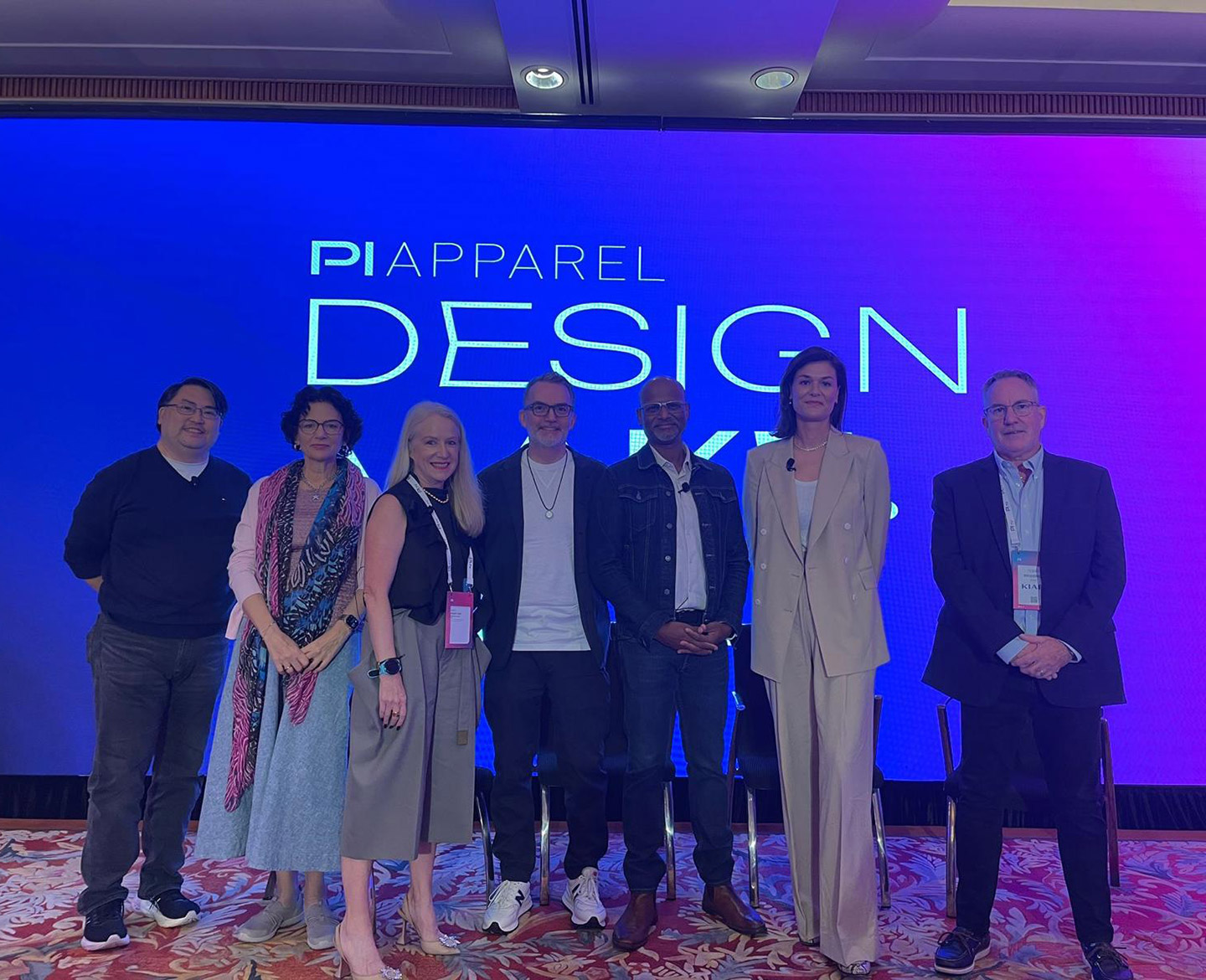
I had the pleasure and honour of speaking at Design.Make.Sell, an industry event in Hong Kong created to bring together Asia’s fashion innovators and industry leaders.
There was vibrant discussion about the current supply chain environment, emerging technologies, and global challenges and opportunities. We spoke openly about the massive disruptions of recent years, from the pandemic to shifting tariffs.
What became clear is that change is constant.
The real question is: how do we navigate this ever-evolving landscape?
Consumers have changed dramatically.
In recent years, we have seen a major shift in appetite and priorities. Gen Z, in particular, is less brand-focused.
They value authenticity, ethics, and sustainability. They are not driven by logos or status in the same way, nor are they buying as much fashion as previous generations.
The reaction to designer brands, driven by escalating prices, declining quality, and exposés on factory conditions, has accelerated interest in independent labels.
Ethical and craft-based brands are thriving, built on community, purpose, and storytelling. The rise of preloved, thrifted, swapped, and upcycled fashion has reshaped what sourcing and supply mean today.
In Hong Kong, HULA is my favourite pre-loved fashion destination. It is a space that feels as thoughtful and elevated as the most luxurious boutique, while championing circular fashion in the most stylish way possible.
When I graduated from fashion college, I launched my own designer hand-knit collection: beautiful handmade sweaters crafted in the UK.
I worked with local outworkers, women who knitted from home as an additional source of income. It was a complex system that required driving, planning, and constant quality control.
These women were extraordinary. Some faced long-term health issues or disabilities, yet they were deeply committed to the vision. They became my friends long after I closed my business and moved to Asia.
But like many local brands in the UK and Europe, I faced challenges.
My cotton yarn became unavailable due to issues in the Gulf. Then came the impact of cheap imports from China: beautifully made sweaters sold at prices I could never match.
Eventually, I had to close my beloved label. The supply chain was no longer sustainable.
While this story is personal, it is also familiar. Many small brands in developed markets have struggled to remain competitive against lower-cost imports.
Ironically, much of my later career took me to the other side of the world, producing high volumes in Asia. Perhaps it was a response to my early experience.
The key message remains: there is no single “better” solution.
“Local” is not always more ethical or efficient.
“Global” is not always cheaper or riskier.
The real question is:
Which option is right for this product, this partner, and this moment?
Today, customers seek both technology and craftsmanship, innovation and authenticity. We are being asked to balance two worlds, and that requires a new lens for decision-making.
Local sourcing can offer important advantages, especially for brands that value responsiveness, community, and smaller production runs.
Benefits may include:
Challenges may include:
As I learned early in my career, working locally can feel personal and purposeful, but it still requires discipline, planning, and strong relationships.
Global sourcing can open up scale, technology, and specialist expertise, especially for brands with more complex or volume-driven needs.
Benefits may include:
Challenges may include:
From my experience, global sourcing opens creative possibilities, but it demands transparency, traceability, and deep trust.
When making sourcing decisions, consider these four key lenses:
Cost & Efficiency
Look at total landed cost, not just unit price.
Speed & Flexibility
Assess lead times, agility, and responsiveness.
Sustainability & Compliance
Evaluate regulations, audits, traceability, and environmental impact.
Relationship & Reliability
Value communication, alignment, and partnership culture.
Every brand will weigh these differently depending on its stage and strategy.
The sourcing world continues to evolve.
After years of moving away from China, many brands are now returning, while others are rediscovering handmade production closer to home.
Sourcing strategy is no longer just about where we make.
It is also about what we make.
Understanding material origins and classification rules can protect both creativity and margin.
Compliance is also becoming more important. For example, the EU’s Digital Product Passport is expected to increase the importance of traceability, product data, circularity, and transparency across textile and fashion supply chains.
These are no longer side issues. They are becoming central to how fashion brands make sourcing decisions.
At its heart, sourcing is a people business.
Behind every product are human hands and hearts.
From my earliest days in local production, I learnt the importance of community and care. Taking responsibility for those who bring your vision to life is part of true leadership.
At this stage in my career, I am grateful to be known for fairness and integrity in my supplier relationships.
These are not abstract qualities.
They are what make long-term partnerships thrive.
Care for the partners who make your products, and honour the people who hold your vision with you.
Stay adaptable, stay informed, and let both heart and data guide your decisions.
Where you make your product says something about your brand, but how you make it tells the whole story.
The right sourcing strategy is not about choosing local or global as a fixed rule. It is about understanding what your brand needs now, what your product requires, and what kind of partner can support your growth with integrity.
Local sourcing can offer speed, storytelling, and community connection, but it still requires discipline and commercial realism.
Global sourcing can offer scale, technology, and specialist expertise, but it depends on transparency, traceability, and trusted relationships.
The strongest brands will be those that can combine heart and data: values-led decision-making supported by clear analysis, supplier mapping, and strategic discipline.
Not always. Local sourcing can reduce transport distance and support community-based production, but sustainability depends on many factors, including materials, energy use, waste, production methods, compliance, and product longevity.
No. Global sourcing may offer cost efficiencies and scale, but brands must consider total landed cost, including freight, duties, logistics, quality control, lead times, compliance, and risk.
A fashion brand should consider the product type, order quantity, technical complexity, required speed, price point, sustainability goals, supplier capability, and long-term brand strategy before choosing between local and global sourcing.
Total landed cost is the full cost of getting a product from the supplier to its final destination. It includes unit price, freight, duties, taxes, quality control, warehousing, delays, and other related costs.
Every sourcing decision involves trade-offs: between cost and craftsmanship, speed and sustainability, scale and trust.
The Local vs Global Sourcing Playbook simplifies that process into a clear framework you can use to guide your next decision.
Inside, you will find:

Kate Padget-Koh is the founder of Fashionable Futures and a fashion industry consultant with more than 30 years of experience across sourcing, sustainability, product development, supply chain strategy, and brand transformation.